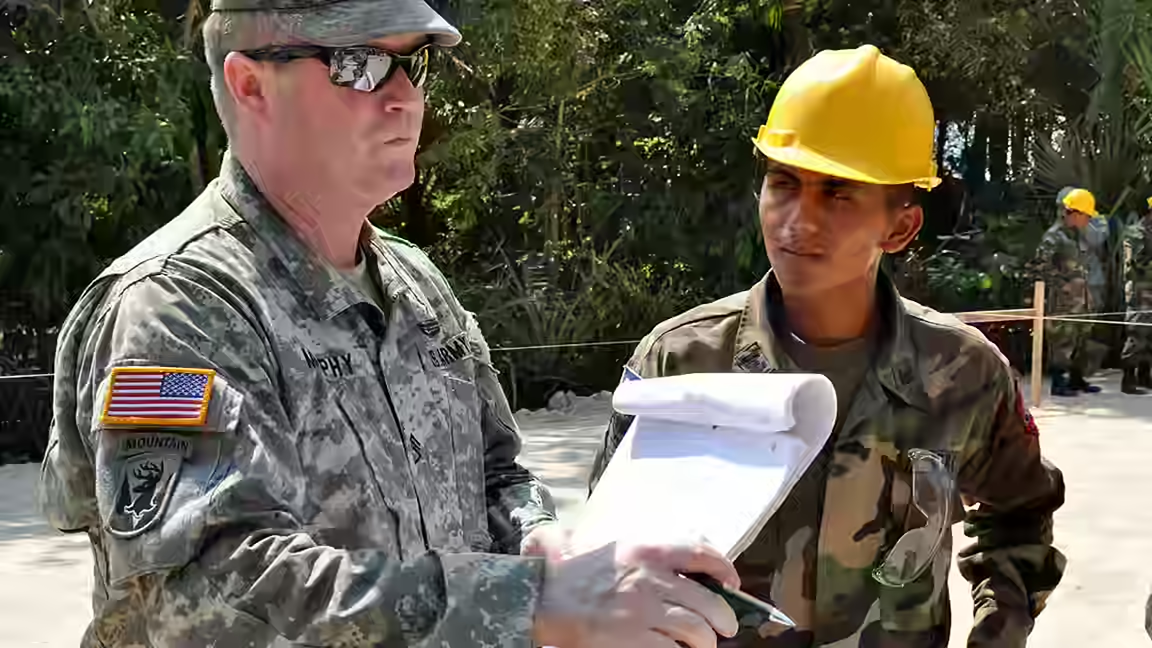
El Salvador has sent more than 2,000 soldiers to Haiti to help find four Salvadoran military personnel who disappeared after an ambush near Port-au-Prince almost two weeks earlier.
The four air-force technicians were serving with the UN-backed Gang Suppression Force, according to the BBC. They were returning to their base in an armoured vehicle when attackers struck in Croix-des-Bouquets, an area controlled by armed groups on the outskirts of the Haitian capital. Their status remained unconfirmed when the deployment was announced.
El Salvador's foreign ministry described the action as a large-scale operation supported by other countries and international organisations. President Nayib Bukele communicated the deployment to Haitian Prime Minister Alix Didier Fils-Aimé and said the troops would also assist wider security operations against gangs.
The search became more contentious after Haitian authorities transferred four bodies that they said belonged to the missing personnel. Bukele rejected that identification, saying the remains did not match the Salvadorans; he said one body appeared to be a child's and another wore the uniform of a different country. Those assertions were reported as the Salvadoran president's account and had not established what happened to the missing technicians.
Bukele had earlier threatened in a social-media post to destroy Haiti's gangs if the four Salvadorans were not released, invoking the anti-gang campaign pursued by his government at home. The new deployment brings a large foreign contingent into an already complicated multinational security effort and raises practical questions about command, coordination and rules for operations in densely populated areas.
The Gang Suppression Force received expanded powers from the UN Security Council in October 2025, but it has struggled to enter areas firmly controlled by armed groups. Gangs hold much of Port-au-Prince and have exploited the political vacuum that followed President Jovenel Moïse's assassination in 2021. The UN says more than 5,700 people were killed in gang-related violence in Haiti during 2026.
The immediate objective of the Salvadoran deployment is the recovery of the four missing personnel. Its broader role, however, places it within an international attempt to reinforce Haitian police and regain access to gang-held territory. Success will depend on reliable intelligence about the ambush, cooperation with Haitian authorities and other contingents, and clear identification of those responsible.
With no verified resolution to the disappearance, claims about the technicians' fate remain premature. The deployment signals that El Salvador is escalating its response, but it does not itself confirm who carried out the ambush or whether the missing personnel are alive.