F-Droid has begun rolling out version 2.0 of its official Android app, completing a redesign intended to make its expanding catalog of free and open-source software easier to search, install and maintain. The project describes the release as its largest app update in a decade, following more than a year of development and 14 test versions.
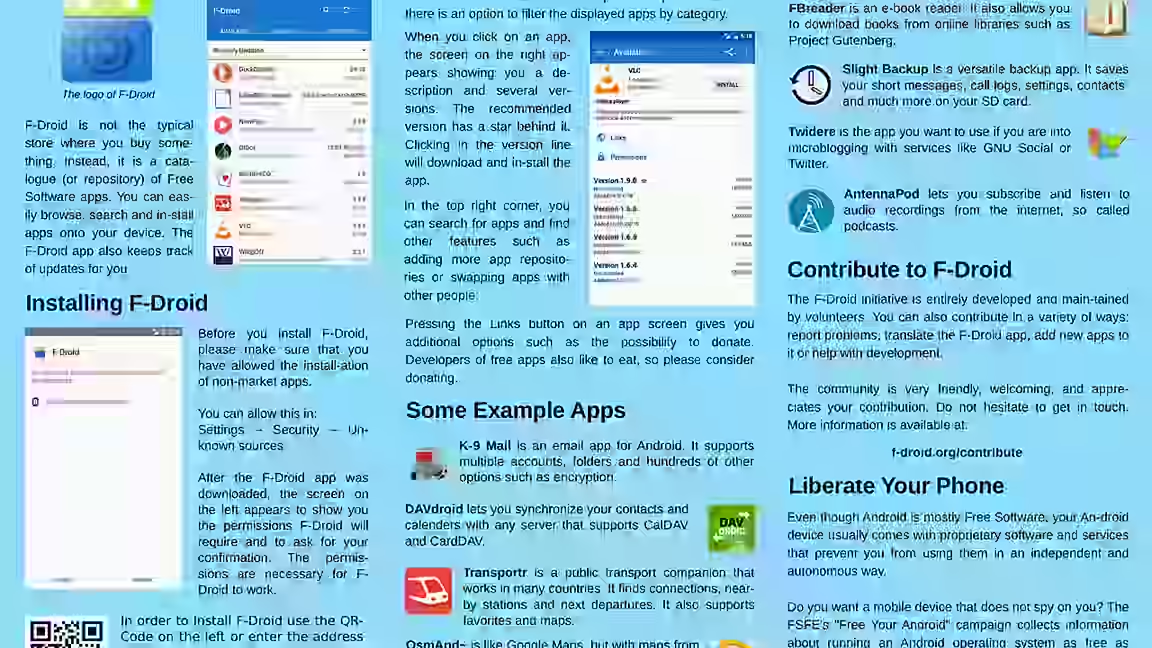
The new interface organizes the app around three main destinations: Discover, Search and My Apps. Categories have moved into Discover, while My Apps brings installed software, available updates and potential issues into one management screen. Settings and Nearby Swap remain accessible from the top bar but no longer occupy primary navigation positions.
Discover now presents recently added and updated applications alongside the repository’s most downloaded offerings. F-Droid has also expanded its classification system with more specialized categories and higher-level groupings. Games, for example, are divided into 17 genres rather than appearing in a single broad collection. The project says the changes are designed to help users find relevant software as the repository grows to thousands of apps.
Search is broader than before. It can query app descriptions, categories and translated content instead of relying mainly on names. The release adds stronger handling for Chinese, Japanese and Korean writing systems and keeps a local history of recent searches. Users can combine filters covering categories, device compatibility and F-Droid’s disclosed “anti-features,” such as dependence on non-free network services. Contextual onboarding screens explain these capabilities inside the app.
Installation has also been reworked. F-Droid 2.0 uses a unified installer and can take advantage of Android’s newer pre-approval interface on supported devices. That allows a user to approve an installation after choosing an app, rather than waiting for its download to finish before seeing the system confirmation. The project links the availability of smoother third-party-store installation to regulatory and antitrust pressure, including the European Union’s Digital Markets Act.
The app now fetches and installs updates by default while respecting preferences already set by existing users. Automatic background checks replace the old pull-to-refresh action for repository updates. That gesture is now reserved for scrolling, reflecting the project’s decision to remove a manual step rather than reproduce every behavior from the previous interface.
Much of the application has been rebuilt with Kotlin Compose and aligned with current Android interface patterns. The technical rewrite is intended to give maintainers a foundation for faster future development, while preserving F-Droid’s focus on software whose source code can be inspected and redistributed. The organization also says app discovery remains free of tracking and engagement-driven recommendations.
As of the event date, September 24, 2026, F-Droid 2.0 was scheduled to reach users progressively over the following weeks rather than appearing everywhere at once. The staged rollout gives the project a path to move beyond its test releases while monitoring a significant change to browsing, search and installation workflows.