Choosing a collection over a catalogue
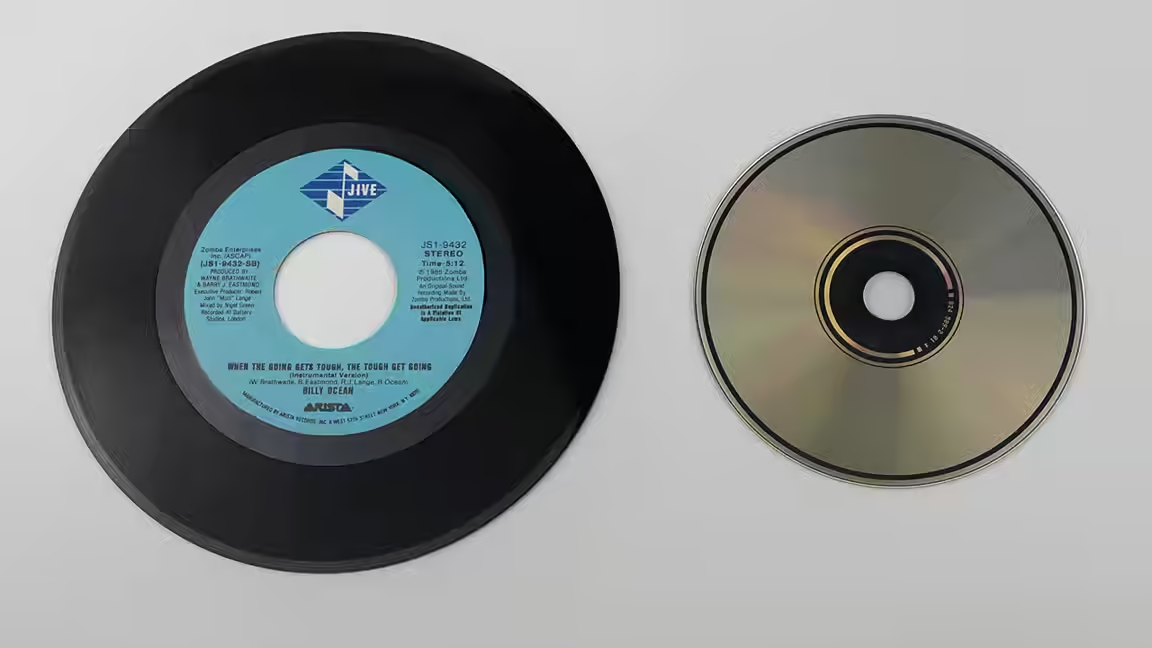
Some music and film fans are returning to CDs, DVDs, records and cassette tapes because physical copies provide a form of control that streaming subscriptions do not. Accounts gathered by the Guardian show that the shift is driven by several overlapping concerns: titles can disappear from online catalogues, prices can rise, recommendations can narrow discovery, and listening or viewing activity can become data for a platform.
The people interviewed were not uniformly abandoning streaming. Instead, many described combining online convenience with media they can keep, lend and play without an active subscription. Their experiences illustrate a practical distinction between access and ownership. A streaming catalogue may be vast, but continued availability depends on licensing decisions and the service remaining affordable and operational. A disc or tape remains usable with compatible equipment.
One participant said the removal of television episodes from a major streaming service prompted a renewed search for DVDs. Others described browsing charity shops, flea markets and libraries for films or music that were difficult to find online. A retired professor who had built a collection of thousands of CDs also rented films by mail, partly because rural internet service was not reliable enough for uninterrupted streaming.
Privacy, attention and support for artists
The attraction is not limited to permanence. Several contributors connected physical formats with more deliberate attention. Playing a record or cassette requires choosing an item, handling it and often listening in a fixed sequence. That can encourage full albums or planned film nights instead of letting a recommendation system continuously supply the next item.
Privacy was another recurring reason. One CD buyer said leaving music subscriptions reduced the personal and behavioral information shared with corporations. A librarian described discs as less overwhelming to browse and valued that no service could analyze the activity. These are personal judgments rather than a comprehensive measurement of streaming behavior, but they show how data collection has become part of the consumer decision.
Collectors also cited direct support for musicians. Buying a tape from a band can feel like a tangible transaction and can provide a way to participate when attending a concert is impractical. Physical objects can be handed to friends, displayed and revisited without generating a new platform interaction.
The trade-offs remain substantial. Collections require space, playback equipment and maintenance; used discs may be damaged, and analogue formats can wear. Streaming retains advantages in portability and immediate access. The reported movement is therefore less a wholesale rejection of digital delivery than a decision to preserve selected works outside it.
That distinction helps explain why formats repeatedly declared obsolete continue to circulate. For these users, the appeal is not nostalgia alone. Physical media supplies predictable access, a boundary around personal data and a slower way of choosing what to hear or watch. As subscription catalogues and algorithms mediate more culture, owning a copy has regained practical meaning.